A classical diagnostic for modern organizations. Three languages. One sequence of collapse. A lens you cannot un-see.
The Three Languages framework is rooted in classical philosophy and applied as an operational diagnostic for modern organizations. It allows leaders to see which language their organization speaks well, which has been lost, and where the point of collapse will occur if nothing changes.
Truth, Goodness, and Beauty are not abstractions. They are the languages every human being responds to — what we trust, what we feel cared for by, and what we belong to. Organizations speak them or fail to. Customers and employees register the difference long before the spreadsheet does.
What it means. Organizations that speak Truth reliably tell customers and employees what is actually true — not what marketing wants to claim or leadership wants to believe. The information environment inside the company matches reality. The product does what is promised. The brand does not over-reach what the operations can deliver.
When it is missing. Customers stop trusting the brand. Employees stop trusting leadership. The organization becomes known for overpromising and underdelivering. Internal politics replace external focus, because the truth has become dangerous to say.
How it cracks. One platform championed Goodness — connecting people — and Beauty — your story told back to you. But the public came to question whether it was a reliable gatekeeper for what is considered true. The Truth language cracked, and the brand began to erode despite massive revenue. Truth, once lost, is the most expensive language to recover; it requires public acts of correction, not assurances.
What it means. Organizations that speak Goodness demonstrate through action that they care about the people they serve — customers, employees, communities, suppliers. Care is visible in the policy, the warranty, the schedule, the apology, the return. The hands of the organization are doing the saying.
When it is missing. Customers feel used. Employees feel expendable. The organization is seen as purely transactional — a logo that takes money and a building that burns people. Loyalty thins. The cost of acquiring the next customer climbs every quarter.
How it cracks. One platform had a Truth problem; people believed it was suppressing speech. When the platform was purchased, Truth was repaired by opening up speech. But in fixing Truth, Goodness broke. The public no longer believed the organization cared about the common human being. Fixing one language without tending to the others is the most common error a leader can make.
What it means. Organizations that speak Beauty create meaning, belonging, and story. Work feels like it matters. The customer experience feels like more than a transaction. The brand pulls people toward something they want to belong to, not just something they want to use.
When it is missing. Work becomes soulless. Customers interact with the brand out of necessity, not loyalty. Employees show up for the paycheck, not the mission. The product may be functional and the service may be fair, and still no one will speak of you with affection.
How it endures. The most enduring brands speak all three. Their products work — Truth. Their service is conspicuously generous — Goodness. And the brand makes people feel they belong to something larger than themselves — Beauty. This is the formula that sustains premium pricing and ferocious loyalty across decades.
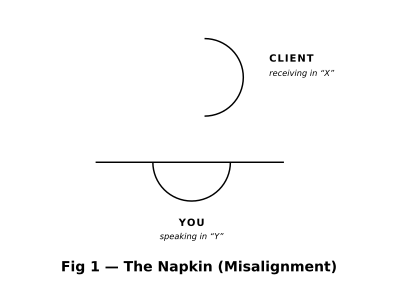
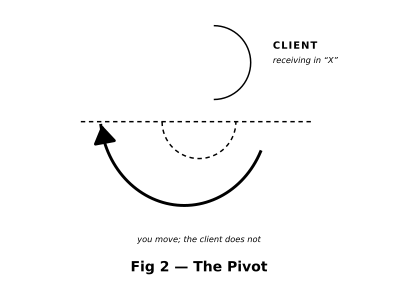
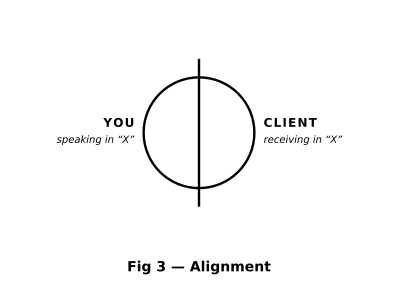
The framework does not stop at the brand. It runs all the way down to the manager standing between a boss and a team. Humans, to a fault, are passionate about reality as they see it — and each of us sees it most fluently in one of the three languages. The leader's task is to read the register and speak it back.
This is why the work is not chess. The chess player positions subordinates against opponents. The bridge keeper translates traffic in both directions, upward and downward, so that what arrives at the boss's desk is in the boss's native language, and what arrives at the team's desk is in theirs.
Genius in the workplace is not an innate talent. It is an unlocked condition. Every employee arrives with a baseline contract of Skill, Experience, and Time — the wagon. The racehorse only runs when the work is made visible in their dominant register. The trilingual manager engineers those moments deliberately, and over time becomes not someone who is good at managing the bridge, but the bridge itself.
Organizations that speak all three languages become nearly indestructible. Organizations that lose one language begin to erode. Organizations that lose two are dying. The framework allows leaders to diagnose which language is missing — and prescribe the remediation before collapse occurs.
Once the diagnostic is set against the organization, the failure mode is rarely a surprise. The languages fall in sequence. We name the next domino before it falls.
"Wisdom in one language is blindness in another."
Inside the building, no one says it. Outside the building, a small minority of customers begin to behave differently. Reviews change tone before they change scores.
Talent leaves. The remaining team learns to keep its head down. Culture surveys still look fine because the questions have not caught up.
By the time the financial press is writing the obituary, the languages have been lost for years. Recovery from this stage is rare and expensive.
Which language is your organization losing right now?— Patrick Sullivan