The 3 Languages Framework · For Sales Organizations

Everything was right. They still said no.

Product, price, and positioning do not explain that room.

Your rep knew the product cold. The price was where it needed to be. The offer was positioned against the competition with precision. The buyer went somewhere else — and nobody could find the mistake. There is a second evaluation running underneath the first. It has a structure, and a team can learn to read it.
The 3 Languages of Sales — book cover
The Second Evaluation

Your buyer is running two evaluations. Most sales training covers one.

i.

The first evaluation

Product · Price · Positioning

The one the buyer can discuss out loud. He can ask about the warranty, challenge the rate, compare the spec sheets. It shapes how deals are prepared, compared, and autopsied after the fact — and it matters.

ii.

The second evaluation

How the decision is being received

The one nobody trained your team for. It is about whether the way the decision is being presented matches the way the buyer is trying to make sense of it — whether your rep is reaching what matters in the decision, or repeatedly talking past it.

A deal can be right on product, price, and positioning and still die in the second evaluation. The buyer often cannot name what failed, so he hands your rep the closest phrase he has: “I want to think about it.” “Send me something.” A phrase like that is not always an objection to answer. It is evidence to read, and a read to test.

The Three Languages

Every person speaks all three. The question is which one is carrying weight now.

The second evaluation runs through three languages: Truth, Goodness, and Beauty. The challenge is not knowing which box someone belongs in. It is learning to notice what is carrying the decision — and to move toward it.

I.

Truth

Structure · Logic · Evidence

The search for how reality holds together. The Truth speaker needs to understand how a thing works before trusting that it will.

II.

Goodness

Relationship · Character · Care

Goodness looks to the person: who you are being, and who a decision will land on.

III.

Beauty

Meaning · Vision · Story

The Beauty speaker receives reality as story: things mean something, they are going somewhere, and they fit into a whole.

“This is a field framework, not a personality system. You do not type a client and protect the label. You make a read and test it.”The 3 Languages of Sales

Sales First · The Operating Move

Read. Test. Pivot. Close the circle.

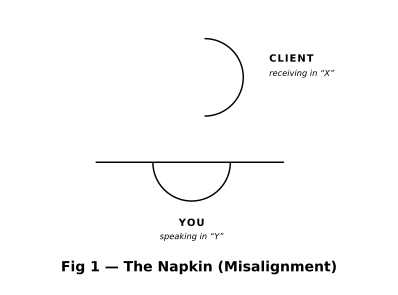
The line is the conversation your rep is attempting to have. Each person’s half circle opens in the direction of their language. The work is to move until the two close into one.

The Napkin: two half circles that do not face each other across the line of the conversation
Read, then test. The half circles do not face each other. The room does not give your rep a verdict; it gives evidence — what the client reaches for, returns to, and does with what he is given.
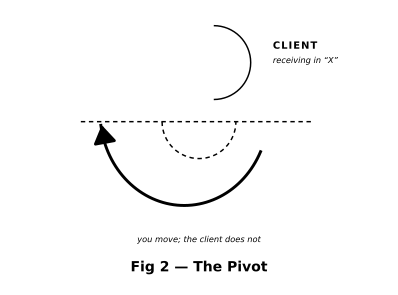
The Pivot: the seller moves around the line to face the client's half circle
Pivot. The client never pivots. The rep does — walking around the line until what she sees from where she is standing is what he sees from where he is standing.
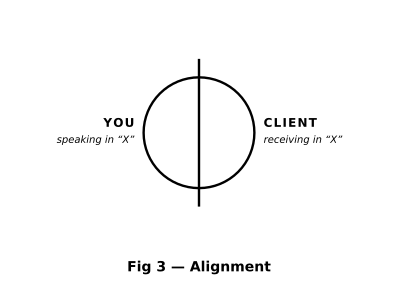
Alignment: both half circles face each other across the line and the circle closes
Close the circle. Both half circles face each other in the same language. The decision remains the client’s.

Closing the circle does not replace the first evaluation. It does not rescue a bad product or erase a bad price.

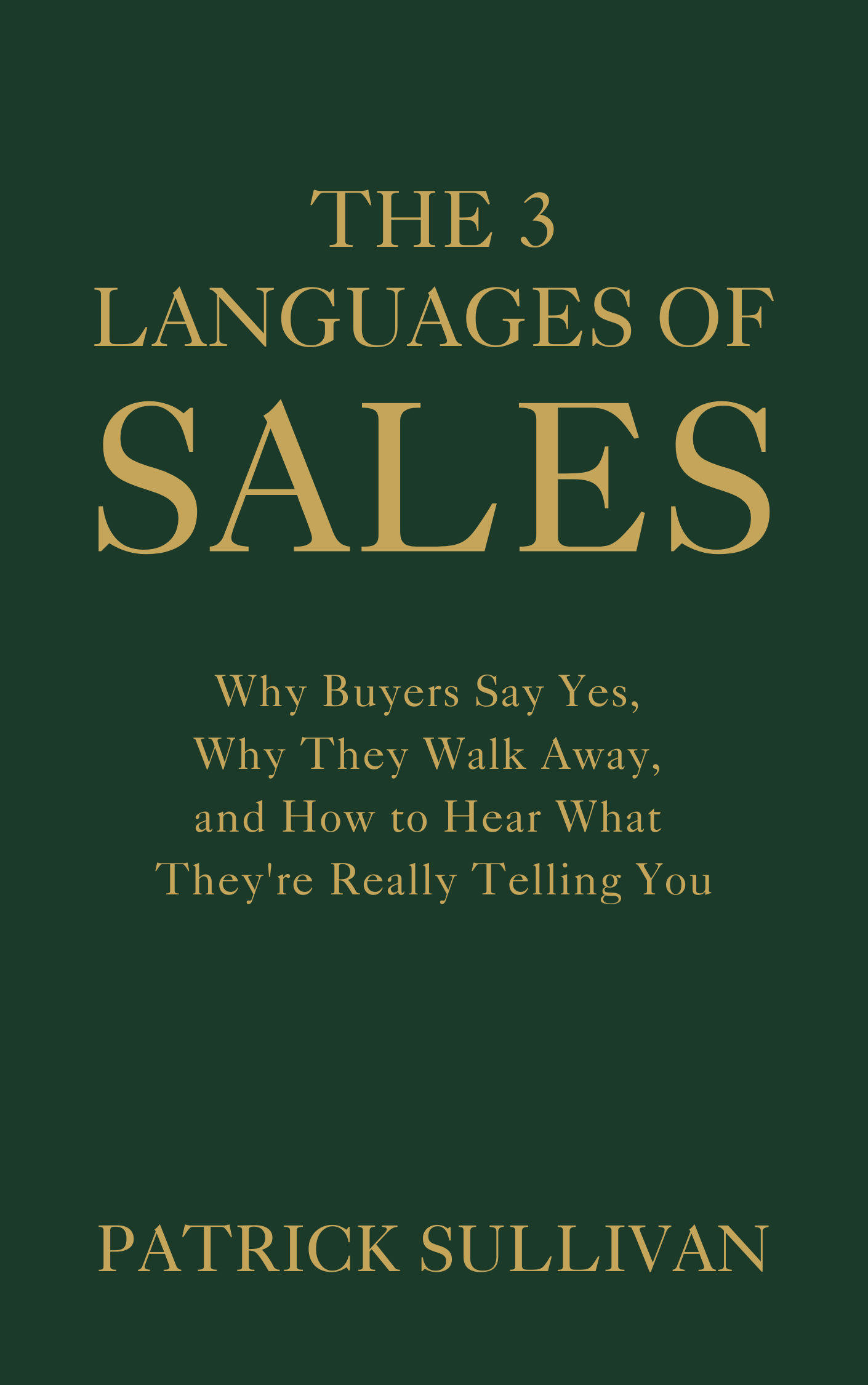
The 3 Languages of Sales — book cover, deep green with gold serif type
The Book · Available Now

The 3 Languages of Sales

Why Buyers Say Yes, Why They Walk Away, and How to Hear What They’re Really Telling You

Three mysteries a sales organization lives with, and one explanation.

The room
The room that said no when everything was right — and the one that said yes when everything was wrong.
The phone
Two reps, the same training, the same quota, the same Monday morning. One of them sings while the other one sighs.
The years
The rare career that compounds while the others reset every January.
For Organizations

From one reader to the whole floor.

The 3 Languages Workshop

Hands-on learning, applied to your team’s actual work, built on The 3 Languages of Sales. Talk with us about the right format for your team.

“What Patrick teaches is different in kind from everything I bought before it, because it is not a technique. It is a way of seeing what was already in the room. Once you see it, you cannot unsee it.”

Michael Mullin — from the Foreword to The 3 Languages of Sales
The Professional Series
  • Available nowThe 3 Languages of Sales
  • In developmentThe 3 Languages of Sales Management
  • Future titlesLeadership · Enduring Organizations
Patrick Sullivan
Who Developed the Framework

Patrick Sullivan

Patrick Sullivan is the author of The 3 Languages of Sales and co-founder of The 3 Languages Group. He developed The 3 Languages Framework.

The book is one way in. The workshop brings it to your team.
Bring The 3 Languages Workshop to Your Organization